
The Flappers who Dream in Marshall's 'Chicago'
By Leonie Capper
ENTERTAINMENT
Edited by Nawal Aziz
4/26/20261 min read
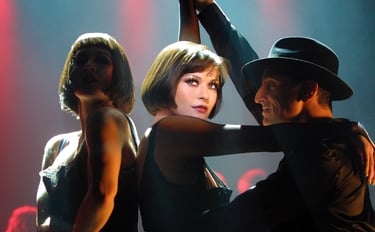
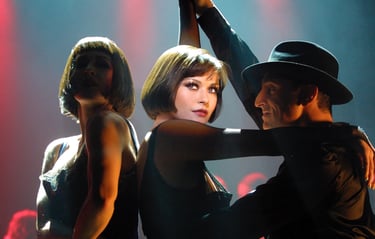
©Miramax
Chicago dazzles at first glance: glittering costumes, sultry choreography and beats that make it impossible not to break out your jazz hands. But beneath the glitz lies something darker – a satire of ambition, fame, and a pretence of innocence.
Set in 1920s Chicago, the story follows Roxie Hart and Velma Kelly, two women accused of murder who transform their trials into spectacles of notoriety. From the opening number, the stage collapses courtroom and cabaret into one, reminding the audience that in this world, performance is survival. The choreography is seductive, precise, and unmistakably chic. Pointed fingers, tilted hips, controlled pauses – every movement calls attention to itself. The ensemble are constantly aware of being watched; every gesture is a statement. Artifice becomes the point.
Male power runs deep throughout the production, most clearly embodied in Billy Flynn, whose charm and manipulation turns the courtroom into a theatrical. Justice is secondary to spectacle; whoever constructs the best story wins. Celebrity is a commodity.
Roxie and Velma do not overturn the system that confines them; they learn to exploit it. Their final duet radiates triumph, but it is a victory built on the structures of vanity and deceit. Vaudeville is their life foundation; success is performance, and performance is survival.
What makes Chicago so enduring lies in it’s refusal to moralise. In it’s invitation to the audience to revel in the glamour while exposing it’s darker truths: fame can distort justice, and image can outweigh integrity. Chicago is not merely a story of ambitious women – but a humbling, sharp reflection of a society that rewards performance above all else.
For more, explore fashion, travel, and lifestyle insights here.
Subscribe to our newsletter!
info@femmine.co.uk