
Madrid and Seville: the Spanish cities for Spring
By Megan Smith
TRAVEL
Edited by Sophie Hager
6/2/20263 min read
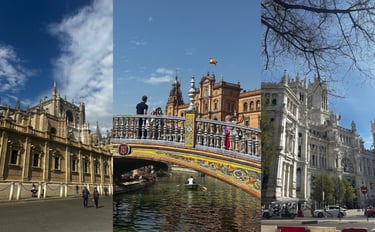
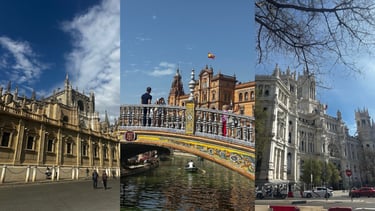
©Megan Smith
Spring has sprung, and with longer days and golden hours, many of us are searching for the perfect getaway for a long weekend. There’s no better time to explore a new city, or perhaps even two. Think of the Spanish capital, Madrid, and the home of flamenco, Seville: both with distinct personalities, but equally beautiful.
Arriving in Madrid, the city greets you with a striking contrast of sleek boulevards and contemporary shopping streets, set against Renaissance facades and ornate Baroque buildings. The streets are bustling with locals as restaurants and cafes spill out onto the pavements. In spring, the temperature ranges from 11-17 degrees Celsius, sometimes climbing into the early twenties.
The city is a cultural gem, with its ‘Golden Triangle of Art’ museums and historic landmarks. There are many art museums, but if time allows for just one stop, I would recommend the Museo Nacional del Prado, Spain’s national art museum and home to hundreds of European pieces dating from the 12th to the early 20th century.
After leaving the gallery, Murillo Cafe, just around the corner, is an elegant and relaxed spot for lunch. I recommend the grilled salmon and, if you fancy something sweet, try the carrot cake, a favourite of the former First Lady Michelle Obama when she visited!
Walk off your lunch with a stroll around the UNESCO-listed El Retiro Park, a forest of sculptures and monuments, with a lake where you can rent a rowing boat on a sunny day. It’s the perfect place to relax and slow down away from the busy streets.
To experience Madrid at its most vibrant, walk down the iconic Gran Via, which takes you through the heart of the city, while Calle Mayor leads you through the heart of the shopping district. This will take you past the Mercado de San Miguel for fresh food and tapas and the historic square Plaza Mayor for traditional food and drink. After a pit stop for food, carry on along Calle Mayor towards the Neo-Gothic Almudena Cathedral and enjoy the grandeur of the Royal Palace of Madrid.
If you have time to venture a little further, catch the tube to Santiago Bernabeu for the tour of the stadium, home to the world-famous Real Madrid. If sports aren’t really your thing, perhaps a visit to the Madrid Zoo Aquarium to see the giant pandas, koalas and a wide variety of wildlife.
After a few days of enjoying the capital, move on to the sun-soaked Andalusian city of Seville by train, from Madrid Atocha to Sevilla Santa Justa, the journey takes just under three hours. The shift in atmosphere is clear, from the buzz of Madrid to the musical humming of Seville.
Seville’s streets are lined with blossoming orange trees, and the city has a vibrant performance and theatre culture. It is dominated by Mudéjar architecture - a mix of Islamic and Catholic styles which characterise the political and cultural history of the region. Set along the banks of the Guadalquivir River, Seville carries a softer, almost coastal ease.
The highlight of my visit and what I would label as the jewel in Seville’s exquisite cultural crown is the Plaza de España, situated within the Parque de María Luisa. The square was built in 1928 for the Ibero-American Exposition. Its grand semicircle embraces a canal dotted with rowing boats, spanned by delicate ceramic bridges. It is an architectural feat, a mixture of mosaics and tiles with clear Venetian influence. It has a movie-like feel, perhaps explaining its appearance as a location in Star Wars: Episode II - Attack of the Clones.
As the largest Gothic cathedral in the world, the 15th-century Catedral de Sevilla and La Giralda bell tower match the plaza in architectural beauty. Thirty-five ramps take you to the top of the tower, allowing for spectacular views over the city’s terracotta rooftops and winding streets.
Just a couple minutes’ walk away is the Real Alcázar de Sevilla, a complex of palaces in the Mudéjar style that is a testament to the cultural diversity of the region. It is one of the oldest palaces within Europe still in use by the state and the royals. It dazzles with its intricate tilework and tropical gardens.
If you follow the river, you’ll find the 13th-century watchtower Torre del Oro, a remnant of Moorish rule, once defending the river and now housing a military museum. Crossing the Isabel II bridge you will arrive in the rustic and vibrant Triana district, a perfect place to explore the authentic Spanish culture and community spirit. Lively but unpretentious, passionate but realistic.
Together, Madrid and Seville offer a long weekend that encapsulates varied aspects of Spanish culture and tradition. Madrid draws you in with its cultural depth, grand architecture and fast pace of life, while in Seville, it can feel like time slows down, allowing you to savour the history and beauty of the place.
For more, explore fashion, travel, and lifestyle insights here.
Subscribe to our newsletter!
info@femmine.co.uk