
Liquid Emancipation
By Elen Jones
LIFESTYLE
Edited by Charlotte W
4/12/20262 min read
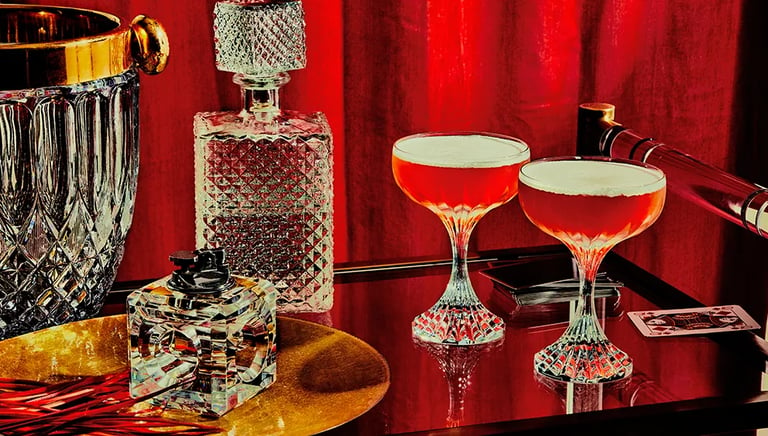
'Like all idealists, you don't know a thing about women. Being a rank materialist myself, I know 'em like a book. The emancipated flapper is just plain female under her paint and outside her cocktails — more so, for she's more stimulated.'
You may recognize this line from J. B. Priestley's An Inspector Calls, a play that critiques shifting social norms in the 1920s, its very setting. At its heart lies the tension between female ideal and material reality: the very traits for which the flapper was admired were also those that provoked condemnation. The paint and cocktails Priestley references were only fragments of a larger cultural transformation that shaped modern womanhood, yet today the flapper often appears detached from the context that produced her. After decades of struggle, women had been granted the vote, and metropolitan expansion of the era had begun in earnest, with people flocking to engage in nightlife, helpfully facilitated by cocktails.
Ask someone to picture a 1920s flapper, and she appears in a loose, sparkling dress, bobbed hair, and a daring hemline — cigarette in one hand, a French 75 in the other. Glamorous and self-possessed, she sips gin as jazz slips through the speakeasy shadows. Now quaint, this image was once radical. The cocktail she holds may seem trivial beside her bold silhouette, yet drinks of the era suggest that social change sometimes arrives in sips rather than ruptures.
From 1920 to 1933, the manufacture, sale, and transportation of alcohol were banned in the United States: Prohibition. As so often happens when pleasure is forbidden, ingenuity flourishes. Speakeasies — from back-room bars to lavish nightclubs — offered illicit drinking behind hidden doors and passwords. Cocktails had existed before, but poor-quality bootleg spirits demanded disguise, encouraging experimentation that shaped drinking culture far beyond the period. More significantly, these spaces fostered gender mixing and women's visible participation in nightlife — only one thread in a wider cultural shift, but a telling one.
Until then, public drinking and evening leisure were largely closed to women. Dancing, singing, smoking, and drinking unsettled ideals that defined them solely as caregivers. Zygmunt Bauman's concept of liquid modernity — a society where solid norms dissolve into fluid ones — neatly captures this moment of transition. Bartenders did not intend social change, yet Prohibition's disruptions blurred boundaries and enabled unintended freedoms for women.
Today, women drinking publicly is hardly scandalous, yet cocktails remain tools of bonding and self-expression. I prefer to see modern rituals as mirrors of the past: not spaces where women are only beginning to emerge, but ones long since claimed. In these moments, it is as if there is only a thin veil separating the modern woman and the flapper. As we raise espresso martinis in the afternoon sun, each glass carries a small, hard-won sip of freedom.
©Chelsie Craig
For more, explore fashion, travel, and lifestyle insights here.
Subscribe to our newsletter!
info@femmine.co.uk