
Heaven Will Protect the Working Girl: How Women in the 1920's Transformed Society and Confronted the Patriarchy
By Elektra Markolefa
NEWS
Edited by Nawal Aziz
3/8/20262 min read
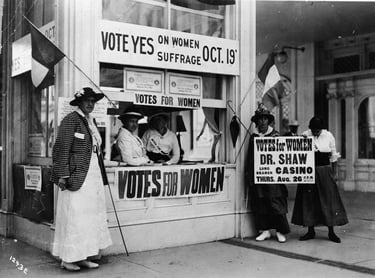
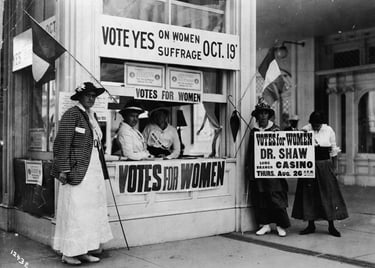
The beginning of the Roaring Twenties marked the transition from a wartime to a peacetime economy following the First World War (1914–18). Accompanying this shift was the flourishing first-wave feminist movement, which laid the foundations inspiring transformation in the public sphere and secure legal and economic equality for women. Accepting capitalism and laissez-faire economics, first-wave feminists argued that equality of opportunity would challenge an androcentric society. This would destabilise women’s patriarchal domestic role. Although this theory came with its limitations, it paved the way for the future of feminism.
During the war, women became the backbone of industry and household economies. Ammunition factories, offices, and transport systems relied on their labour and precision. When the armistice came, many governments expected them to step back. But for millions of women, work was no longer just about survival — it was about autonomy.
Legislation mirrored this shift. The Education Act of 1918 raised the school-leaving age, while the Sex Disqualification (Removal) Act of 1919 opened doors to professions previously closed to women. Teaching, nursing, civil service — opportunities expanded, and with them, expectations. Pathways into the public sphere were widening, and women were stepping boldly through them.
This progress reshaped women’s social roles. The ‘New Woman’ roamed cinemas, dance halls, and political meetings unchaperoned. Fashion became political: cropped hair, flapper dresses, and daring cosmetics rejected Victorian restraint and reflected mobility and independence. Clothing became a symbol of freedom.
Yet liberation was uneven. Working-class women juggled paid work with unpaid domestic labour, while wealthier women benefited from household technologies and servants. Wage inequality persisted. The marriage bar forced many back into the home. And accusations that women had “taken jobs” from returning servicemen revealed just how fragile progress remained. Seeking equality within capitalism often meant negotiating with structures still dominated by men.
Still, the 1920s set a precedent. Women transformed wartime necessity into social and political momentum. They asserted individuality in workplaces and public life, challenging assumptions that a woman’s place was purely domestic. The decade did not eradicate inequality, but it made its dismantling inevitable. The legacy of those New Women echoes today in the freedoms and expectations we now take for granted.
For more, explore fashion, travel, and lifestyle insights here.
Subscribe to our newsletter!
info@femmine.co.uk