
From Progress to Pushback: How Transgender Rights ave been Reshaped
By Erin Donnelly
NEWS
Edited by Kelsey Liddell
4/28/20262 min read
©Shutterstock
On March 26th, the International Olympic Committee [IOC] announced that it has banned transgender women from participating in female category events at the 2028 Los Angeles Olympics and future Games.
Under the new guidelines, all athletes competing in the women’s categories would be required to undergo genetic sex testing, alongside a blanket ban on anyone who identifies as transgender. This marks a significant shift from the IOC’s previous position on inclusion and non-discriminatory sport.
Kirsty Coventry, who was elected as the organisation’s 10th president last March, said in defence of the policy: “It would not be fair for biological males to compete in the female category. As a former athlete I passionately believe in the rights of all Olympians to take part in fair competition.”
The decision reverses the IOC’s 2021 Framework on Fairness, Inclusion, and Non-Discrimination, which allowed participation based on gender identity and promoted inclusion as the “default”. Now, the updated policy adheres to guidance from medical experts who felt “it would simply not be safe” for biological males to compete in the female category. It also states that those who have transitioned from male to female “retain the advantages of going through male puberty”.
However, the decision has faced widespread criticism. More than 100 human rights groups have criticised the IOC’s decision, arguing that the policy undermines bodily autonomy, privacy, and athlete wellbeing. Charities such as DSD Families have emphasised that, while fairness in competition is important, “eligibility rules must be proportionate” and consider the impact on a vulnerable community.
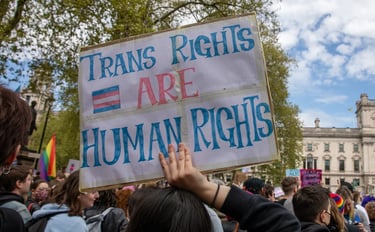
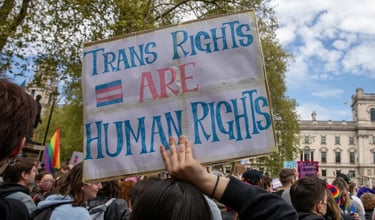
Beyond the Olympics, similar decisions are being adopted in the UK, as transgender rights have become increasingly polarised in public debate and legal frameworks.
On March 24th, Girlguiding UK announced that from September 6th transgender girls must leave the organisation. This follows an earlier announcement last December to prohibit biologically male members from joining, with the organisation publicly stating it aims to ensure it is “operating lawfully”.
Campaign groups have condemned these changes. Trans+ Solidarity Alliance criticised the update as an example of “inclusive organisations being bullied into excluding people against their will”. They called the government a “failure” in their inability “to live up to its promises to the trans community”.
Legal developments have contributed to this shift. In April 2025, the Supreme Court ruled that the definition of sex in the Equality Act 2010 should be interpreted as biological sex.
Taken together, these decisions indicate a broader movement in how transgender rights are being tackled in law and public life. As the UK’s legal frameworks shift, and institutions adjust their positions, larger questions loom. What does this mean for inclusion and equality, and, how much further will they go to isolate vulnerable groups in society?
For more, explore fashion, travel, and lifestyle insights here.
Subscribe to our newsletter!
info@femmine.co.uk