
From Gaza to Tehran: Understanding the Recent Strikes and Their Regional Implications
NEWS
Anonymous
3/1/20261 min read
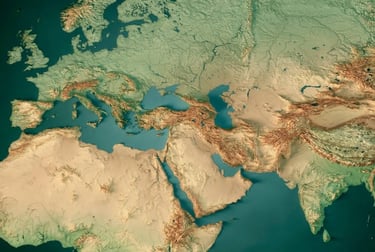
The Gaza war officially began on October 7th, 2023, when the Palestinian military group Hamas launched a surprise attack on Israel, leading Israel to begin a full-scale war in the Gaza Strip. Currently, the war is at a ‘ceasefire’, meaning the conflict is not over, but frozen. People in Gaza are continuing to die from airstrikes, and borders are tightly controlled.
But how are this weekend's airstrikes linked to the Gaza war?
Over the last 48 hours, the U.S. and Israel struck Iran’s capital, Tehran, along with multiple other areas, including Isfahan and Bushehr. It is thought that the reason for this attack was to prevent Iran’s construction of Nuclear Weapons, though this isn’t confirmed. During the Tehran attack, Iran’s supreme leader, Ali Khamenei, was killed, confirmed by Iranian state media, by a U.S-Israeli air strike, along with 4 other people, including Khamenei’s daughter and grandchild. In retaliation for this, Iran struck multiple attacks across the Middle East, attacking places including Israel, Qatar, Dubai, and the U.S Navy Headquarters in Bahrain. Khamenei's assassination is not the sole reason for these strikes.
The Gaza War escalated the Israel-Iran conflict that has existed since Iran’s 1979 revolution, as Iran has long been one of the main supporters of several Palestinian militant groups, funding and training Hamas for decades. The killing of Ali Khamenei only heightened this conflict further.
In recent months, the US has moved military forces to the Middle East. Whether this is purely a precaution or a preparation for further action remains unknown. With Iran’s allies closely watching these events unfold, many analysts are warning that this could spiral into an unprecedented global crisis.
©Getty Images
For more, explore fashion, travel, and lifestyle insights here.
Subscribe to our newsletter!
info@femmine.co.uk