
From Cabaret to Crisis: 1920s Berlin's Fall to Nazism
By Megan Smith
NEWS
Edited by Charlotte W
5/10/20264 min read
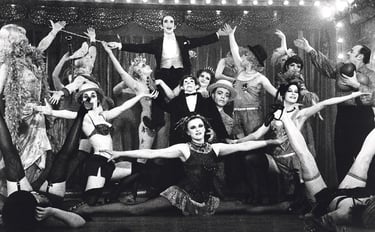
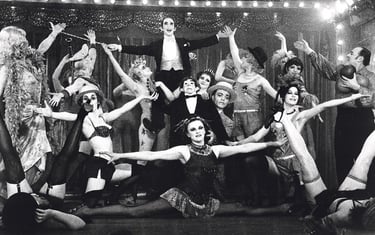
©The Stage
A chandelier hangs low over a dusky room, thick with cigarette smoke and the clink of cocktail glasses. The sound of jazz cuts through the air, surrounding women in sequins with kohl-rimmed eyes. Laughter echoes through the intimate sphere as a glamorous performer delivers a joke about a member of the Reichstag. This is the Berlin of 1929 - an underground club, a bohemian and decadent space that defies cultural expectations. This is cabaret culture - bold, sexually charged and political.
Today, most people are familiar with such imagery through popular theatre productions and musicals such as Moulin Rouge!, Chicago and Cabaret rather than through history. Cabaret is set in 1929–1930 Berlin, and its fictional Kit Kat Club acts as a metaphor for the political turmoil and change of the later years of the Weimar Republic. The musical perhaps embodies the nature of cabaret: not a distraction from the political sphere, but one of the most visible expressions of Weimar democracy and the end of censorship that led to experimentation within the arts.
Following Germany’s defeat in the First World War, the country was economically devastated and morally shaken by the loss of life and political instability. The Treaty of Versailles imposed heavy reparations and the burden of war guilt whilst hyperinflation in 1923 reduced savings and caused everyday prices to soar.
A period of prosperity and relative political stability returned under the chancellorship of Gustav Stresemann, whose diplomacy secured foreign loans to support Germany’s recovery. Foreign investment from American loans enabled renewed urban growth and a sense of cautious optimism within Germany’s cities.
This economic revival ushered in the era now known as the “Golden Age”, due to the flourishing arts and cultural scene within Berlin. As night drew in on the city, glamorous groups flocked to the clubs with their neon signs that reflected in the puddles on the pavements. Inside, artists and bank clerks, students and married couples sat side by side as social hierarchies softened. Performers such as Claire Waldoff became household names , turning political frustration into profanity littered satire. For many young women, this was the world of the “New Woman:” hair cut short and tailored suits replacing corsets. They claimed a new public visibility, drinking, working and performing in a place that became a manifestation of democratic freedom.
Berlin became a hub for social experimentation with cabaret at its centre. The Eldorado clubs, of which there were five locations, welcomed LGBT+ clientele and permitted those wishing to wear “clothing of the opposite sex” at a time when homosexuality remained criminalised. Drag performances, often described at the time as “transvestite” acts, drew crowds. For marginalised Berliners, cabaret was a means of expression and acceptance.
This openness extended to politics. Singers delivered emotional ballads followed by performances in which parliament was the punchline. Complex debate and political discourse were translated into performance which were accessible to a wider audience in a more intimate space. Artists tested the boundaries of their newly discovered freedom of speech. Politicians across the ideological spectrum were targeted by routines mocking their views and appearances. This refusal to align itself with a single party mirrored the pluralism of the republic itself. The stage became a microcosm of democratic culture.
Such critiquing displays warranted backlash. To conservatives, cabaret symbolised post-war moral decline and national humiliation. One Austrian writer accused the cabaret scene of transforming Berlin into “the Babel of the world”. Dancers such as Anita Berber were deemed the epitome of this scandalous scene: her bisexuality, provocativeness and her uncontrolled drug habit evidence of social collapse. It is therefore unsurprising that, once the Nazis rose to power, these spaces of satire and sexual experimentation were among the first to be silenced.
The Wall Street Crash of 1929, exposed Germany’s economic reliance on American loans. The country was hit by mass unemployment and a loss of confidence in the republic. With reduced disposable income, Berlin’s nightlife declined. Simultaneously, longstanding fears of communism and revolution intensified amid street clashes between communists and right-wing activists.
Adolf Hitler and the Nazi Party capitalised on this instability and anxiety, offering simple explanations for a complex crisis: Bolshevik-Jewish conspiracies sabotaging Germany, weak democracy and betrayal by other nations - messages that resonated with the politically disillusioned. Following Hitler’s appointment as chancellor in 1933, the regime began implementing totalitarian control, not only over politics but also culture. Strict restrictions were placed on theatre, music and film and books unapproved by the regime were burned. Many leading Jewish artists and academics were forced to flee. Clubs were closed and performers went into hiding. The suppression of cabaret after 1933 was not just incidental moral policing, but a deliberate dismantling of a public forum that challenged authority and encouraged questioning.
In its place came a new focus on national unity and the creation of a Volksgemeinschaft - a “people’s community” that promoted rigid gender roles and traditional family values. The regime encouraged physical fitness and discipline, while women, though permitted some sporting activities, were encouraged to focus on domesticity and motherhood. The Nazi state demanded obedience where cabaret culture had permitted freedom.
Cabaret culture was not a simple form of entertainment — a show to watch and forget — but a deeply political art form, embedded in the democratic freedoms of a republic and silenced by a dictatorship that would devastate Germany. The decadent rooms in Berlin allowed for political anxieties to be expressed and gender norms inverted. The closing of such marked the beginning of the end for free speech and expression in 1930s Germany. Weimar cabaret therefore endures not only as nostalgia for a lost “Golden Age”, but as a warning for how fragile democracy can be. Artistic expression, political satire and glamour flourished just years before society was completely dismantled and freedoms overturned. In such a collapse of democracy, the most expressive and liberalised spaces are the first to be destroyed, silencing that which is deemed non-compliant.
For more, explore fashion, travel, and lifestyle insights here.
Subscribe to our newsletter!
info@femmine.co.uk