
Believing Women In a World Run by a Boys' Club
By Megan Smith
NEWS
Edited by Abby Lawrence
4/7/20262 min read
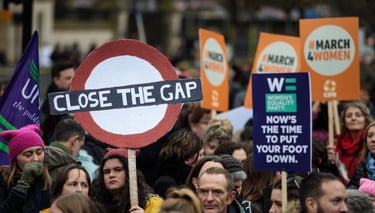
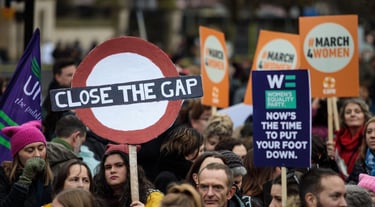
Last week saw the first set of the files published relating to Sir Peter Mandelson's appointment to the role of British ambassador to the US, with the key takeaway being that Prime Minister Keir Starmer was warned of a ‘general reputational risk’ prior to his position’s confirmation. Both Mandelson and Andrew Mountbatten-Windsor were arrested in late February, but in relation to misconduct in public office after sharing internal government and trade reports with Epstein. Here we still see the protection that such influential men face, whilst authorities focus on their political negligence over serving justice for the victims of Epstein’s predatory network. Beyond the political implications of their arrests lies the deeper concern: why did it take the release of official documents for many to believe the claims of numerous women?
Allegations surrounding those who visited the island or interacted with Epstein, receiving gifts and donations, have circulated in public discourse for years. Survivors, perhaps most notably Virginia Giuffre, have spoken out multiple times. Ms Giuffre attested in her memoir that she had sex with Andrew on three occasions, and that other girls involved all looked under eighteen years of age. Giuffre’s treatment became a poignant reminder of the backlash victims face after speaking out, with some reports referring to her as a ‘masseuse’ or in more explicit words. The late Virginia’s family have also commented that what was known of Mandelson’s connections was enough that he should never have been appointed ambassador. In spite of this, key figures such as Andrew and Mandelson have faced little consequences for their actions.
The shift in discourse within Britain in regards to such figures is not a new development, but a continuing feature of a patriarchal structure. Society demands documentary evidence before believing women. Political and social elites continue to benefit from networks that often face scrutiny - a type of ‘boys’ club’ that prioritises reputations over behaviour and minimises women’s influence and voices for their own gain. This is not the first time that Starmer’s government finds itself being labelled a “boys’ club”: leader of the opposition Kemi Badenoch accused Starmer of “always putting the boys’ club first” whilst within the party, culture secretary Lisa Nandy claimed that Labour briefings have are often ‘dripping with misogyny’. Labour is still yet to have a female leader, and these new revelations about known connections to Epstein suggest a laissez-faire attitude to protecting women and girls and promoting their success. Parties such as Reform UK’s popularity are a worrying development in reinforcing such a “boys’ club” within parliament. The party has voiced their plans to scrap the Equality Act, whilst their Gorton and Denton by-election candidate criticised “childless women”.
Such evidence inevitably leads back to the legacy of the Me Too movement, which promised change to listen to and believe women. Whilst the language of “believing women” has entered mainstream discourse, its application remains conditional. Testimony is often treated as suspect without documentation. “Where are the messages? Why didn’t you record what happened?” Are often questions demanded of shaken women who come forward before they even have a chance to process what has happened. Whilst the media promotes this idea of believing, this rhetoric is still far from reality.
What the Mandelson files ultimately reveal is not only a political misjudgment, but a cultural one. They expose a hierarchy of credibility and masculinity in official documents that are privileged over real-life experience. Powerful male voices are prioritised over the voice of a vulnerable female victim. These files revealed no new information, but merely confirmed society’s need for physical proof to shift towards believing women.
©European Movement
For more, explore fashion, travel, and lifestyle insights here.
Subscribe to our newsletter!
info@femmine.co.uk