
A First for Women: Scotland Becomes the First Country in the World to Provide Free Period Products for All
By Leanne Wylie
NEWS
Edited by Kelsey Liddell
5/5/20262 min read
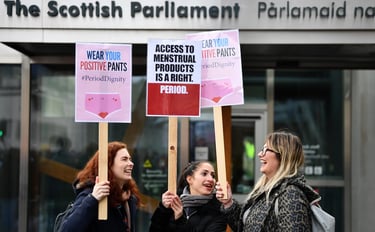
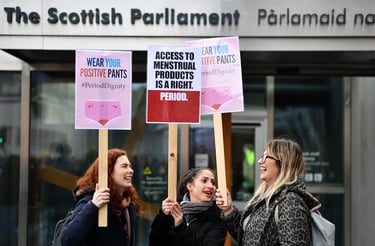
©Getty Images
In August 2022, Scotland’s decision to make period products free for all across the country was marked as a huge milestone for organisations and individuals campaigning against period poverty. Resurfacing across UK social media amid the current cost of living crisis, it serves as a key reminder of the importance of tackling inequality and the role of progressive political choices.
But what is period poverty? And why does it relate to the UK’s current cost of living crisis?
In short, period poverty refers to a lack of access to, or inability to afford, sanitary products, as well as the shame that still surrounds menstrual cycles for many across the world.
The main problem with period poverty is that countless women are forced to manage their periods in unsafe or unsanitary ways. This creates a negative domino effect across every aspect of their lives, including education, employment, and overall well-being.
Since 2016, Scottish Labour MP Monica Lennon, has been working to end period poverty. This led to the introduction of the Period Products (Free Provision) (Scotland) Bill in 2020, which became an Act in early 2021 and was enforced in 2022.
Prior to this, Scotland had already taken steps to address the issue in 2018. After a survey found that one in four students struggled to access period products, they were made free and accessible in all schools and universities in the country. This helped tackle period poverty and stigma, whilst easing anxieties of those attending school during their period.
Now, in 2026, anyone who needs them can get free period products in Scotland. The legislation places a legal obligation on local authorities to provide them where and when necessary, marking a significant moment of change for women and showcasing the hard work of those campaigning against period poverty.
While this legislation has been in place since 2022, it has only recently gained widespread attention again online. Its resurgence across UK social media makes it an important moment to re-showcase, reminding both the public and governments of the importance of women’s health regardless of socioeconomic status.
It acts as a beacon of hope for women not only during the cost of living crisis throughout the UK, but also to women across the globe and setting an example for progressive politics. The changes prove what a huge difference can be made through decisive action, with the hope that similar policies may eventually be adopted internationally.
For more, explore fashion, travel, and lifestyle insights here.
Subscribe to our newsletter!
info@femmine.co.uk