
1990s Minimalism Today: Why It Feels So Natural Again
By Alice Testa
FASHION
Edited by Sophie Hager
4/21/20262 min read
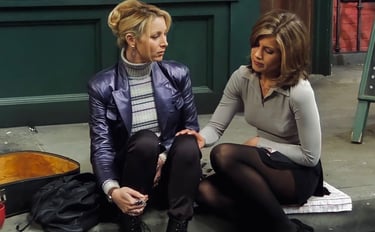
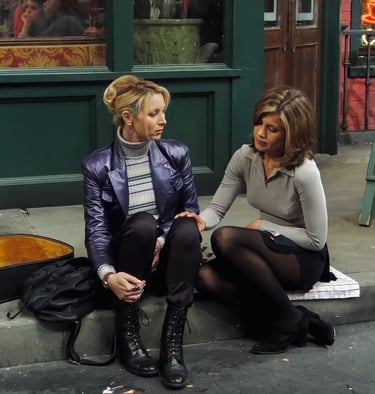
©Warner Bros.
In fashion, trends often return with a sense of nostalgia. Yet, the current revival of 1990s minimalism feels different. Slip dresses, clean tailoring, neutral palettes, and understated silhouettes are once again dominating runways and wardrobes, but this time they do not appear as costumes from another era. Instead, they blend seamlessly into the present, reflecting a broader cultural shift toward simplicity, longevity, and quiet sophistication.
The original movement was born out of resistance. In the 1990s, designers such as Calvin Klein, Jil Sander, and Helmut Lang rejected the excess of the 1980s: embellishment, spectacle, and overt displays of wealth. Their response was a fashion language defined by restraint. Collections emphasised precise tailoring, luxurious fabrics, and a refined color palette built around black, white, beige, and soft neutrals.
Nothing was accidental. Even a simple slip dress felt intentional. These clothes held attention and never demanded it. They suggested a different kind of power, the one rooted in control and confidence.
Today, that philosophy resonates more strongly than ever. In a digital era defined by constant visual stimulation, fast-moving trends, and endless social media content, minimalism offers a sense of calm. Clean lines and understated clothing create a visual pause within a culture that often feels overwhelming. For many consumers, the appeal lies in the clarity of the aesthetic: clothes that are timeless rather than temporary.
At the same time, attitudes toward sustainability and overconsumption have shifted. The appetite for fast, disposable fashion is increasingly at odds with concerns around sustainability. Minimalist dressing offers an alternative, with fewer pieces chosen with care and designed to last with elegance.
This evolution transforms minimalism from an aesthetic “quiet luxury” into a sensory experience. While the 1990s focused on subtraction to communicate intellectual rigor, today’s version places greater emphasis on the wearer’s well-being. The silhouette shifts from a geometric cage to a fluid dialogue between the body and the fabric.
The emphasis on material quality elevates sustainability to an intrinsic value: a Khaite sweater or a coat from The Row is not designed for a single season, but to become a piece of a personal archive. Within this landscape, “quiet luxury” comes to be defined by craftsmanship. It expresses a refinement that only those attuned to quality will notice, celebrating a form of discretion that is, above all, a tribute to craftsmanship.
Trends often reflect the emotional climate of their time. If the 1980s made fashion status loud and the early 2000s intensified it, the 1990s turned minimalist fashion into a philosophy with a stronger sense of clarity.
Fashion is always shaped by the world around it. In a moment marked by uncertainty, rapid change, and digital saturation, the appeal of simplicity becomes clear.
In this context, minimalism feels like a reset. The revival of 1990s minimalism feels perfectly suited to the way we want to dress today, effortless and quietly confident.
And right now, it feels exactly like what fashion needs.
For more, explore fashion, travel, and lifestyle insights here.
Subscribe to our newsletter!
info@femmine.co.uk